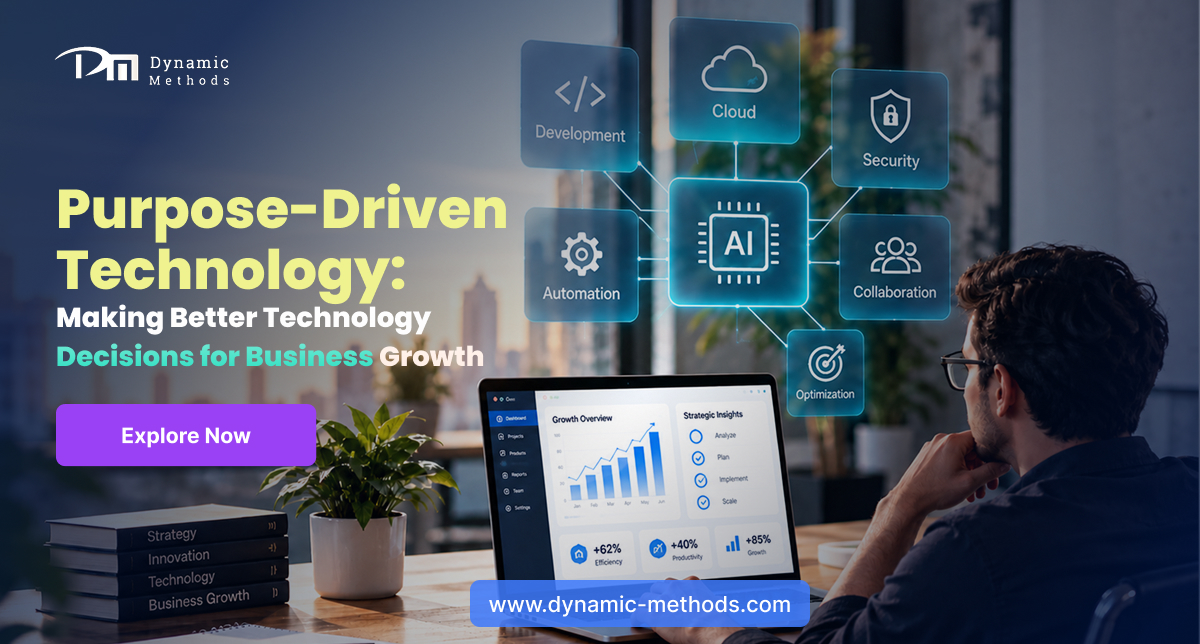
Purpose-Driven Technology: Making Better Technology Decisions for Business Growth
Every business today invests in technology, but not every business gets meaningful results from it. Many companies buy tools, adopt platforms, and follow trends without asking a simple question: does this technology actually serve our goals? This is where purpose-driven technology becomes important. It is an approach that puts business goals first and treats technology as a tool to reach them, rather than a trend to chase. When companies adopt this mindset, they make sharper decisions, spend budgets wisely, and build systems that support real growth instead of short-lived hype.
What Does It Mean to Put Purpose Before Technology?
Purpose-driven technology means every tool, platform, or system a business adopts must connect back to a clear outcome, whether that is faster service, lower costs, or a better customer experience. It moves the conversation away from what is new and towards what works for the business.
Companies that skip this step often end up with a pile of software that solves small problems but creates new ones, such as poor integration or wasted licence fees. A clear purpose behind each decision keeps teams focused and keeps spending under control. It also gives everyone in the business a shared reason for adopting a tool, rather than a decision made by one department in isolation, which matters a great deal once a company grows past a handful of staff.
Building a Strategy That Actually Fits the Business
A solid business technology strategy starts with a review of current processes and honest questions about where technology can genuinely help a team work better. It should map out priorities across the next one to three years, not just the current quarter.
Leaders who treat their approach as a living document, one that gets revisited and adjusted, tend to avoid the trap of investing in tools that no longer fit the business a year later. A business technology strategy built this way stays useful long after the first rollout.
How to Make Digital Transformation Work From Day One
A digital transformation strategy without a defined purpose often turns into a scattered set of projects that never quite finish. Teams need to know what success looks like before they begin, whether that is a faster order process or a simpler way for customers to reach support.
A proper digital transformation service can help a business set realistic milestones, rather than trying to change everything at once and losing momentum halfway through. A digital transformation strategy built around clear milestones tends to survive contact with reality far better than one drawn up in a single meeting. It also gives staff a clearer picture of what changes to expect and when, which reduces the resistance that often slows these projects down.
Why Off-the-Shelf Software Often Falls Short
Off-the-shelf tools rarely fit every business perfectly, which is why many companies turn to custom software solutions built around their exact workflow. This approach removes the workarounds that teams often create to cope with rigid, generic systems.
Custom builds tend to bring several advantages that businesses notice quickly:
- Systems that match existing workflows instead of forcing new habits
- Fewer licence fees for features that never get used
- Easier integration with tools already in place
- Room to grow the platform as the business grows
Businesses that invest in custom software solutions early often avoid the costly rebuild that comes from outgrowing a generic package within a couple of years.
Matching the Right Platform to the Right Business
Not every business needs the same setup, so technology solutions for businesses must reflect the size, industry, and pace of that specific company. A ten-person firm and a two-hundred-person firm rarely need the same platform.
The right choice usually balances cost, ease of use, and room to expand later. A rushed decision made purely on price often costs more within a year or two, once gaps in the system start to show, which is exactly why technology solutions for businesses deserve proper research before purchase. A short trial period or a conversation with an existing customer of the platform often reveals far more than a sales pitch ever will.
Signs a Technology Approach Is Actually Working
A workable technology strategy puts people and outcomes ahead of features. It sets out what problems need solving, who owns each decision, and how progress gets measured over time.
It also leaves room for change. Markets shift, customer habits shift, and a good technology strategy allows a business to adjust course without starting from scratch each time something new appears. Regular reviews, perhaps once or twice a year, keep the strategy honest and stop old assumptions from lingering long after they stop being true.
Why Some Businesses Choose to Build Their Own Systems
Custom software development gives a business full control over how a system behaves, instead of the limits a ready-made product forces on a team. This matters most for companies with processes that do not fit a standard mould, and it often pairs well with a dedicated product engineering service for the parts that need greater technical skill.
A few reasons businesses lean towards custom builds include:
- Direct ownership of the code and data
- Freedom to add features as needs change
- Stronger security control across the whole platform
- Long-term cost savings once the system matures
Many firms treat custom software development as an investment rather than a cost, since a well-built system keeps paying off years after launch.
How to Make Purpose Part of Every Decision
A business that puts purpose-driven technology into practice checks every proposal against a simple test: does this move the business closer to its goals? Teams that ask this question before they approve a new tool avoid a great deal of wasted spend.
Firms such as Dynamic Methods work with businesses on exactly this kind of decision-making and help teams weigh their options so the final choice fits the goal rather than the trend of the moment.
How Better Software Supports Better Decisions
Good business software solutions give leaders visibility into what is actually happening across the business, from sales figures to support tickets. Without that visibility, decisions rely on guesswork rather than evidence.
The strongest business software solutions connect data across departments, so a decision made in one part of the business reflects what is happening everywhere else, not just a single team’s view. Over time, this kind of visibility becomes one of the clearest markers of a mature, well-run operation, and it tends to shorten the time it takes for leaders to spot a problem before it grows larger.

Growing a Business Without Growing Technology Debt
Every quick fix a business adds to its systems has a cost that shows up later, whether that is a clunky workaround, a license nobody remembers buying, or a tool that no longer talks to the rest of the stack. Left unchecked, this pile of small compromises becomes technology debt, and it slows a business down exactly when speed matters most.
A purpose-led approach keeps this debt from building up in the first place. Each new system gets checked against the goal it needs to serve, so teams add fewer tools overall and retire the ones that no longer earn their place. Over a few years, this discipline tends to save far more money than any single discount on a new platform ever could.
Conclusion
Better technology decisions rarely come from chasing the newest tool on the market. They come from a clear sense of purpose, a strategy that fits the business, and software built around real needs rather than assumptions. Purpose-driven technology gives businesses a simple filter for every decision, helping them grow without the waste that comes from adopting tools for the sake of it. A business that works with the right partner, such as Dynamic Methods, can turn that filter into a repeatable process, one that keeps technology spending focused on outcomes that genuinely matter for the business.
Frequently Asked Questions
1. What does purpose-driven technology actually mean for a small business?
It means a business chooses tools based on what it needs to achieve, not on what looks impressive or trendy.
2. How do I know if my current approach to technology is working?
Check whether each system still solves a real problem and whether teams use it without constant workarounds.
3. Is a custom build always better than an off-the-shelf tool?
Not always, but it helps when a business has workflows that standard platforms cannot support well.
5. How long does a typical digital transformation usually take?
It varies by business, though most meaningful changes take several months rather than weeks.
6. Can a small business afford to build its own software?
Yes, many providers offer phased builds, so a business can start small and expand the system over time.
Purpose-Driven Technology: Making Better Technology Decisions for Business Growth Read More »


 INDIA OFFICE
 CANADA OFFICE